
Cities are of course not just walls, roads, infrastructures and any other kind of element or structure that contributes to its material dimension. Whether they are metropolises or small villages, inhabited centers or suburbs and of course also those small agglomerations full of life that are neighborhoods, we are always talking about living organisms, and therefore of what sociology calls with the term challenging. The magic lies in the fact of cohabiting within a well-defined space considered by all as home and animating it with a systematic activity of interaction, communication and exchange. 321
in doing so they structure that characteristic software of human beings which is culture, , in the long run, , they make that society assume its own identity which defines it in a unique way differentiating it from all the others. And what else is the specificity of a group constituted by if not by that immaterial whole that anthropologists call culture and which represents, if one may say so, the software that makes individuals function and therefore interact through shared communication codes? And just as there is at least virtually a global society that can be moved in unison or nurture common feelings, even more so there are those local societies that are defined by the coexistence in a specific place like a city or a village where it is also easier for that empathy to be triggered which is a prelude to communication, sharing and therefore to the elaboration, naturally progressive, of the distinctive culture of that place that is also defined by it, of the same set of lBut if a society is made up of people and equipped with those typically human tools that we call languages, those that in their varied and complex set define a specific society and the culture that is peculiar to it. Society and culture that can only arise in a close connection with a specific territory, like a city for example or a village, which are nothing other than the space within which a more or less large group coexists that, through systematic contact and continuous relating, elaborates and structures that immaterial set that anthropologists and sociologists call culture. And if a culture can be understood as the nourishment of the spirits that communicate with it and that is passed down from generation to generation giving that culture. which we can define as the spirit of a society. Culture that is not p which is transmitted and shared through the multiple forms of communication. even radical changes that reflect the social and cultural evolutions of their populations that constantly change skin, with each generation and without missing differences and nuances within the same generation. And when a population is no longer the same because it makes new choices, beats the paths of innovation and above all acquires new members and customs through migratory flows, the container in which those subjects live, interact, exchange and share inevitably also changes.
We are talking about cities, that is, places not only for living but also for the continuous elaboration and weaving of languages, ideas, lifestyles and personal or collective preferences that, all together, form the culture of the people who live in that city: the symbolic humus that allows and activates communication, coordination and collaboration between subjects, projects and activities in common. It is often said that each city is a case in itself, and this is because its people, through those cultural processes that are activated by cohabitation and marked by exchanges and sharing, give shape, life and voice to the specific culture of a territory and, therefore, to its original identity. that, in certain circumstances, go beyond the beaten track producing that change that makes inveterate traditions obsolete, replacing them with new schemes and models.
the physiognomy of cities the same goes for those smaller fractions of them that are territorially smaller but nevertheless have an identity that is often sui generis, which are the neighborhoods. It is a law that applies to all of them, Udine is one of them, that neighborhoods, all neighborhoods, change over time. Some more, others less, but all have experienced more or less significant transformations and are linked, more than to buildings and streets that have sometimes remained identical, to their no less fundamental nature as living, collective and animated entities. The best feature of a neighborhood is in fact its human side, the people who live there: the men, the women, the children and their respective, perhaps impalpable but certainly very tangible social and cultural dimensions. Like languages, which evolve, customs that change, lifestyles that follow one another in a whirlwind, and so on. Nothing is as it was before, even if the resulting restlessness is a healthy counterpart to the static, closed and immutable identities that characterized societies dominated by tradition.
And if even in Udine everything or almost everything has changed, this is even more true for a very particular corner of the city, a small but important neighborhood that has experienced a change of a social and cultural nature so sudden, radical and profound that it has even inspired a change of name.
In truth, not everyone appreciated the replacement and, above all, digested that new name, Borgo Stazione, as we all now call it and, above all, the press includes it in the headlines when it comes to reporting certain unpleasant news stories. But the decline of that ancient label of “magnolia neighborhood” that boasted a neighborhood where fifty or so magnolias have adorned both sides of that key artery that is Via Roma for a lifetime is a sign of the times. We are talking about those trees of Japanese origin whose buds begin to bloom in mid-February, giving rise to a suggestive natural spectacle that, although it does not last long or perhaps precisely for this reason, the residents wanted to enhance by naming the entire neighborhood after them.
But it is certainly not the flowers that the people of Udine think of today when the discussion turns to everything that is found, concentrated, and above all happens, within the perimeter of the railway station. The thoughts especially of those who were born in Udine forty or more years ago will go instead to that new entry represented by foreign immigrants, who in that neighborhood are present in unusual proportions so much so as to generate, even when, twenty years ago, the foreigners were half of what they are today, gave everyone the feeling of being witnesses, naturally impotent, of a perhaps unstoppable invasion of people never seen before, with strange features, abstruse speech and incomprehensible if not unpleasant customs. New things that are difficult to accept also because they are not announced and without asking permission, and finally perceived as threatening and deleterious when these amenities that appeared from nowhere have taken on the character of permanence within a context so small as to make it obligatory, at least once, to address others with the informal “tu”. And how can one, the old residents must have asked themselves who knows how many times, be on first name terms, develop familiarity and intimacy with someone whose identity is elusive and who, at least at first glance, aroused more distrust than empathy?
where once almost everyone addressed each other informally. the magnolia neighborhood is now unrecognizable, arousing nostalgia for times gone by when even here there wasn’t even a shadow of a foreigner. , as disruptive especially because they landed without warning and concentrated in a singular way within the limited space of a very small neighborhood where everyone inevitably knows and touches each other, almost without managing to avoid each other as perhaps that not large but not insignificant portion of inhabitants who feel usurped would hope.
new residents who arrived in large numbers even from far away and who today, according to the municipal registry data, represent 40% of the residents of the neighborhood, even exceeding the Italian citizens in two of its eleven streets, with a third in which the native-immigrant ratio is exactly fifty-fifty.
The birth of a multi-ethnic neighborhood in the heart of the city and in particular in the shadow of the station building is probably what inspired that new baptism. Talking about Borgo Stazione in fact involves making a comparison with those similar neighborhoods in European cities dominated by a symbolic place like the train station which, in addition to being the space in which practically everyone has experienced at least once in their life the thrill of a departure and the warmth of a return, is also the center of gravity of a peculiar humanity in which immigration and multi-ethnicity not only express themselves to the maximum power, but find themselves coexisting with the anthropological traits so typical of these urban areas that are marginality, deviance, even crime, combined however with the solidarity and generosity that almost always distinguish the people who frequent them with particular assiduity.
, with the wonder of their flowering comes to Despite the magnolias of this street, this was called precisely called not without affection the magnolia district, the name Borgo Stazione has imposed itself as a coinage of the local press, it most likely arises from two characteristic elements of this area of the city that are common to similar European realities but not only. The presence first of all of a place like the Station that inspires comparisons with similar realities especially European ones marked, in addition to the departures and arrivals of almost all the citizens served by that structure, by a sedentary but also nomadic humanity that bears all the hallmarks of marginality, fragility and deviance typical of street people, but also of the solidarity that unites people who in common adversity find an element of strength and comfort. which inspires comparisons is in fact very recent and arises from the desire to emphasize what is today the true key characteristic of this area, namely a truly massive foreign presence consolidated around the station itself in the last 25 years. : Combined with the intense frequentation of foreigners from other neighborhoods linked to the presence of dedicated services and shops, this highly visible settlement of both residential and commercial type has caused the old and familiar label of “magnolia neighborhood” to fall into disuse, which nevertheless persists among some nostalgics also because the changes of recent years have spared precisely those fifty trees of Japanese origin historically present on both sides of that very lively artery that is Via Roma which in mid-February of each year is embellished thanks to a suggestive and early flowering. It is therefore those white petals, even if for a brief interlude on the threshold of spring, that represent the calling card of Udine for those who, having arrived by train and exited the station building, find themselves walking along the flower-filled sidewalks of Via Roma from which you can easily reach the nearby historic center or walk towards other destinations. But in addition to the travelers and, of course, the Udine residents of this and other neighborhoods, the wonder of the magnolias in bloom is also enjoyed by the many people who arrive and get off the buses at the nearby bus station, in addition to those who pass through the two stops of the urban lines that are located on opposite sides of the station square. The presence of three urban and interurban mobility hubs makes a significant transit of people inevitable at all hours of the day and in particular in two peaks that coincide with the moments before and after school hours, when many students converge in the station area by bus, train or coach to then head to one of the city institutes in a journey repeated in the opposite direction on the way back. There is no shortage,in this colorful and noisy mass of young people enriched by the many commuters, those who opt for a more or less prolonged stop to dedicate to meetings but also to refreshment for which there are various places specialized mostly in the captivating formula of finger food. Combined with the huge flows of mobility, the attendance for recreational purposes is certainly one of the figures of a very lively neighborhood, capable of suddenly coming to life both outside and inside places where there are also those who come specifically from outside the neighborhood or even from outside the city to take advantage of a peculiar gastronomic offer represented, for example, by the famous kebab served here in six points of sale. But the experience of consumption and shopping possible in commercial establishments managed by immigrants of various nationalities that now overwhelm those of the Italians does not stop at tasting the kebab. In some cases atypical shops where you can buy unknown goods and merchandise imported from all over the world that are often only available here, that is, in a commercial area developed to satisfy food and product preferences that are very distant from those of the native population. An authentic multicultural emporium where exotic food products from mini-markets coexist with telephone accessories hanging on the walls of colorful shops, with financial services from money transfers, with the tricks of the trade of very friendly barbers and with South American specialties from Latin community meeting points. But Borgo Stazione is naturally also a residential area where as of 12/31/2023 2,372 people were living, of which 1,431 were Italian citizens and 941 were foreigners, with a foreign presence rate of almost 40%, which is however exceeded in two specific streets – Viale Europa Unita and Viale Leopardi – where immigrants are the majority.that is, in a commercial area developed to satisfy food and product preferences that are very distant from those of the native population. An authentic multicultural emporium where exotic food products from mini-markets coexist with phone accessories hanging on the walls of colorful shops, with financial services from money transfers, with the tricks of the trade from very friendly barbers and with South American specialties from Latin community meeting points. But Borgo Stazione is naturally also a residential area where, as of 12/31/2023, 2,372 people were living, of whom 1,431 were Italian citizens and 941 were foreigners, with a foreign presence rate of almost 40%, which is however exceeded in two specific streets – Viale Europa Unita and Viale Leopardi – where immigrants are the majority.that is, in a commercial area developed to satisfy food and product preferences that are very distant from those of the native population. An authentic multicultural emporium where exotic food products from mini-markets coexist with telephone accessories hanging on the walls of colorful shops, with financial services from money transfers, with the tricks of the trade from very friendly barbers and with South American specialties from Latin community meeting points. But Borgo Stazione is naturally also a residential area where, as of 12/31/2023, 2,372 people were living, of which 1,431 were Italian citizens and 941 were foreigners, with a foreign presence rate of almost 40%, which is however exceeded in two specific streets – Viale Europa Unita and Viale Leopardi – where immigrants are the majority.
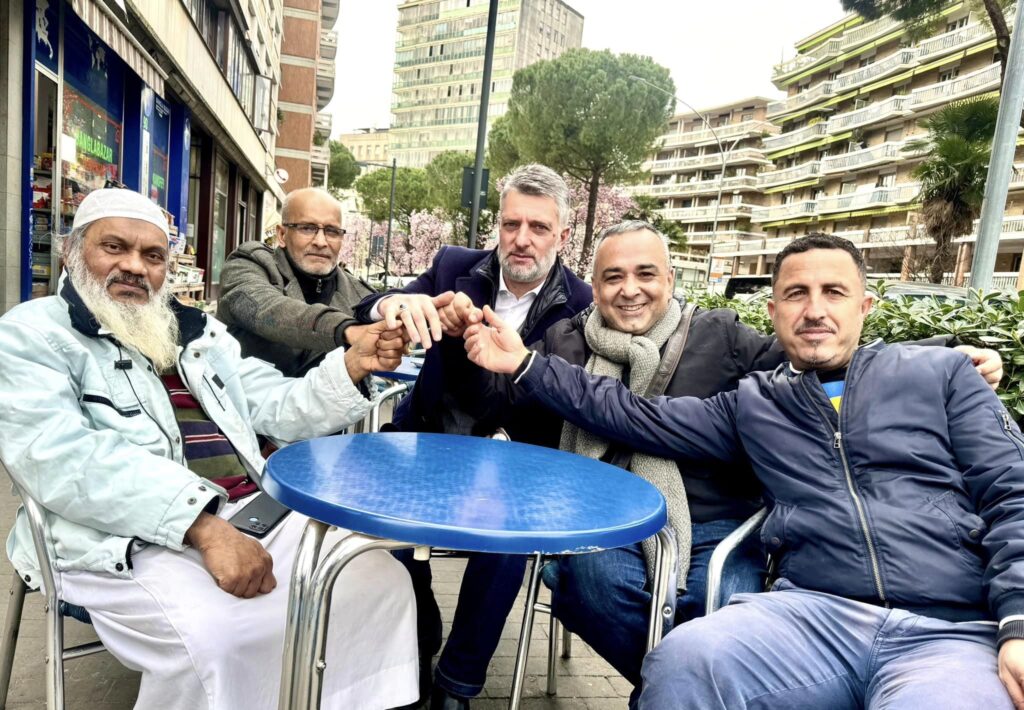
And it is precisely the catering declined in the youthful mode of a stop for a break for which it has been modified only since the creation of and in particular since it was chosen by many immigrants as a place to live but also to trade, to meet and interact according to customs once unknown in these parts. that has changed No one can say with certainty when the first “non-EU citizen”, as we called them then, settled in the district of the railway station in Udine. Perhaps it was the Chinese citizen who in the early 90s opened a mini-market in front of the station building that still exists and where many immigrants post their ads “looking for an apartment” or “looking for work” written in ideograms or other spellings and alphabets. Or perhaps we are talking about that Algerian called Boubir who, towards the end of that decade, introduced kebab to the city for the first time in a place that still exists in via Roma and is run today by his three children. The fact is that that embryonic foreign presence has grown over time with new settlements that have given life to today’s microcosm characterized by the liveliness of an authentic multicultural emporium, by the prayers in Arabic of the two “mosques” that arise in these streets and by the continuous coming and going of individuals and families who project a colorful and vocal humanity in unknown languages onto these sidewalks. What I and other friends have decided to nickname “Borgo Mondo” is the new frontier of Friuli Venezia Giulia: a pulsating laboratory of integration and peaceful coexistence whose secret has yet to be discovered. We, who have been searching for it for more than twenty years, have found signs of it in the Islamic center of Via della Rosta where we have organized various editions of an event called “Aperitivo dadaista” that even saw the singer Graziella Vendramin sing a legendary jazz song like “Summer time” on the carpets on which Muslims pray five times a day. But harmony is also built every day in minimarkets like the one that the Bengali Mia Alam runs on Viale Leopardi and where the Friulians go to buy fresh chili peppers and curry leaves. Naturally, in this neighborhood, as everywhere in Europe in the station areas, there are the phenomena of hardship and marginalization that find a supportive side in the welcoming and cosmopolitan community that lives here. The van of the Italian Army that patrols day and night and that represents the most concrete incarnation of the security needs expressed by a very frightened native population contributes itself to the complexity of a problematic neighborhood that never sleeps and is full of stories that are still unknown. A very significant one for us is represented by the pre-dawn coffee in one of the four bars all run by Chinese people on Viale Leopardi: a commercial establishment,that of Cai and his son Cai FangFang, who since those hours without light has attracted workers of all ethnicities who begin the day with the all-Italian ritual of espresso coffee. And the language of Dante Alighieri is the common communication code for the 64 peoples of Borgo Stazione who these days turn their gaze upwards to admire the blooming magnolias of Via Roma, the same ones from which this neighborhood once took its name before the city news imposed the new denomination of Borgo Stazione. A name, this last one, that can perhaps reflect well a reality also made up of the overtaking of foreign residents over Italian ones in two of its eleven streets (in Via Roma instead there arefifty fifty ), but which carries with it a stigma that keeps away from this area the people of Udine from other neighborhoods and the Friulians in general. But we want to bring the latter right here, organizing events that give maximum dignity to this natural stage of cultural diversity. The aim is to make known and understood, and not only to the Friulians, a piece of the region hyperconnected to the world as a small personal anecdote can explain. At the party we organized on March 9th we immortalized the Moroccan barber Rachid in his shop in via Battistig. The day after the video was published on YouTube, Rachid himself showed us the WhatsApp message sent to him by his older brother. A congratulatory message that left Morocco and arrived in Udine at 2:46 pm, that is, well before Rachid himself became aware of that video whose link we had sent him at 5:11 pm. And this too is part of the secret of Borgo Mondo.
Yours, forever
Mo
Sociologist, journalist, author
oriolesmarco@gmail.com
To see the almost 200 videos made by Orioles in Borgo Mondo and with the immigrants of Fvg visit his YouTube channel: